
Some wildlife sightings stay with you forever. For me, one of those unforgettable moments happened in Yala National Park during the annual Palu fruit season.
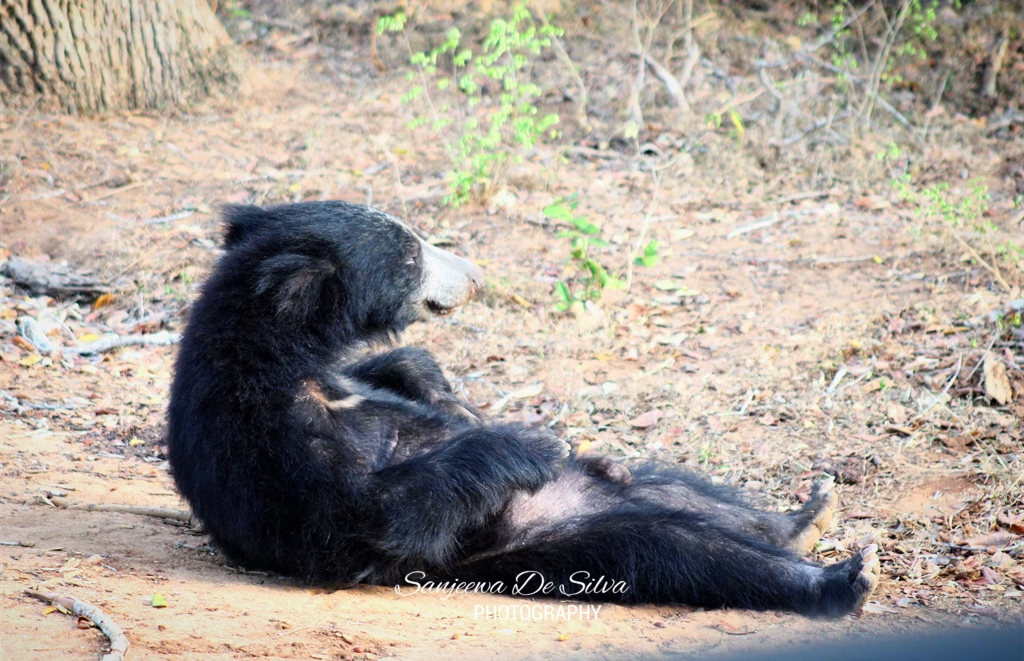
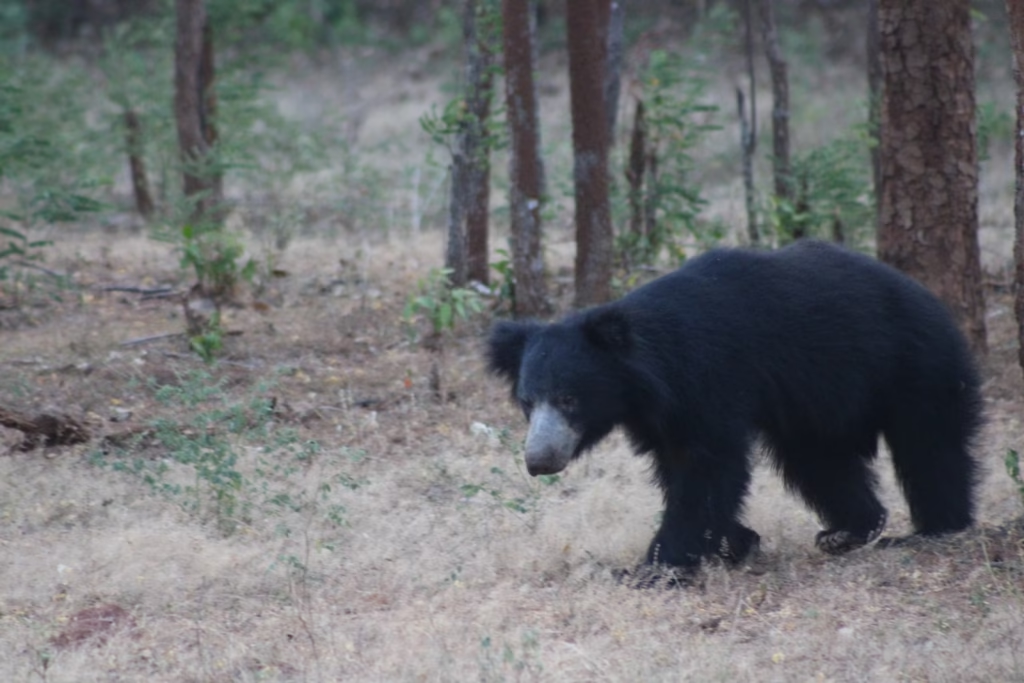
In July, I had the pleasure of guiding my guests on a wildlife experience in Yala. Over the course of six safari drives, we were incredibly fortunate to encounter four Sri Lankan Sloth Bears—a remarkable experience considering how elusive these animals are throughout most of the year.
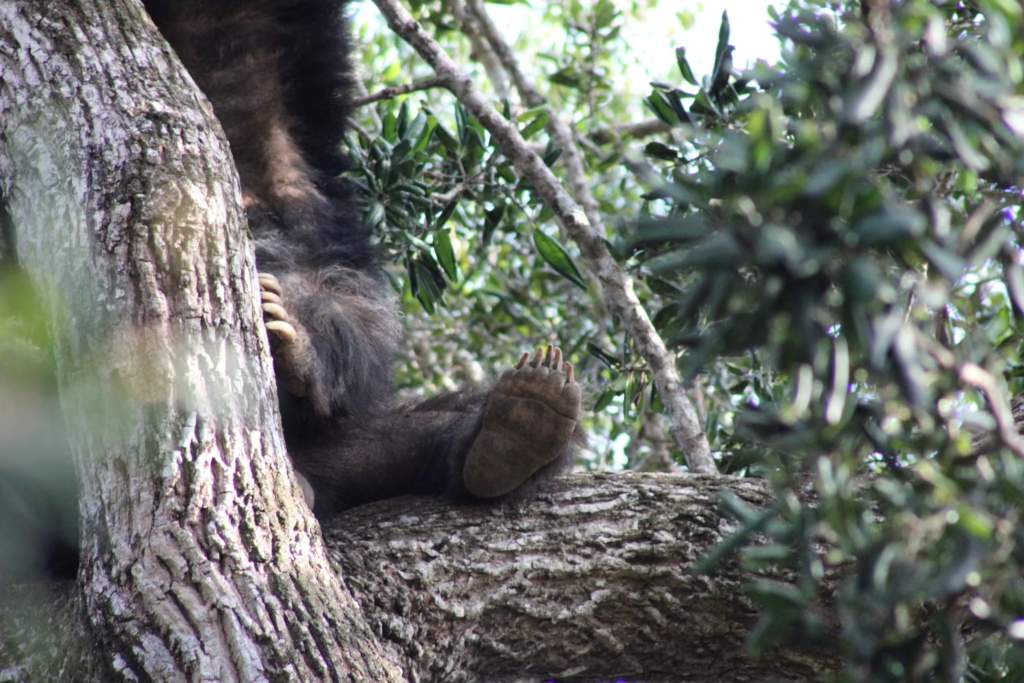
The most memorable sighting came when we discovered a sloth bear high in a Palu tree (Manilkara hexandra). After enjoying a meal of ripe Palu fruits, the bear had settled comfortably among the branches and was peacefully sleeping. Watching this powerful yet gentle animal resting in the canopy was a rare and magical moment—a behaviour that very few visitors get the opportunity to witness.
For most of the year, the Sri Lankan Sloth Bear (Melursus ursinus inornatus) spends much of its time searching for termites and ants. With its powerful claws, strong forelimbs, and specially adapted lips, it is perfectly designed for breaking open termite mounds and feeding on insects.
But nature changes with the seasons.
From June to August, the dry forests of Yala become a paradise for sloth bears as the native Palu trees produce their sweet, nutritious fruits. During this short period, these normally secretive animals shift their diet and spend more time feeding on this seasonal food source.
Although they appear bulky and slow-moving, sloth bears are excellent climbers. Their long curved claws and powerful limbs allow them to climb high into Palu trees, where they feed directly on ripe fruits. After a satisfying meal, some bears can be seen resting among the branches, enjoying the safety and comfort of the canopy.
This unique behaviour makes the Palu season one of the best times to observe sloth bears in Yala National Park. Fruiting trees attract bears to specific locations, increasing the chances of witnessing natural behaviours such as climbing, feeding, and resting.
Seeing four sloth bears during six safaris reminded me once again that every wildlife experience is different. Patience, knowledge of animal behaviour, and a little bit of luck all come together to create unforgettable moments in the wilderness.
As a naturalist, these are the experiences that make every journey special—not simply finding an animal, but witnessing a genuine moment from its natural life. Seeing that sloth bear sleeping peacefully on a Palu tree after its meal was a beautiful reminder of the incredible relationship between wildlife and the seasonal rhythms of Sri Lanka’s forests.
For anyone hoping to encounter Sri Lanka’s sloth bears, the June–August Palu season offers one of the most rewarding wildlife experiences on the island. And with a little patience and luck, you may be fortunate enough to witness this extraordinary sight—a wild sloth bear resting among the branches of a Palu tree.
The Sri Lankan Sloth Bear is a vulnerable species, and protecting Yala’s dry forests and native Palu trees is essential for conserving this remarkable animal and the unique ecosystem it represents.
Dinesh Sanjeewa De Silva
Naturalist | National Tourist Guide Lecturer